Date page
13 May 2026, Wednesday
Feasts, fasts and events
 Разрешается рыба.
No other calendar events have been found for this date yet.
Lives and liturgical texts
Virgin Martyr Glyceria at Heraclea
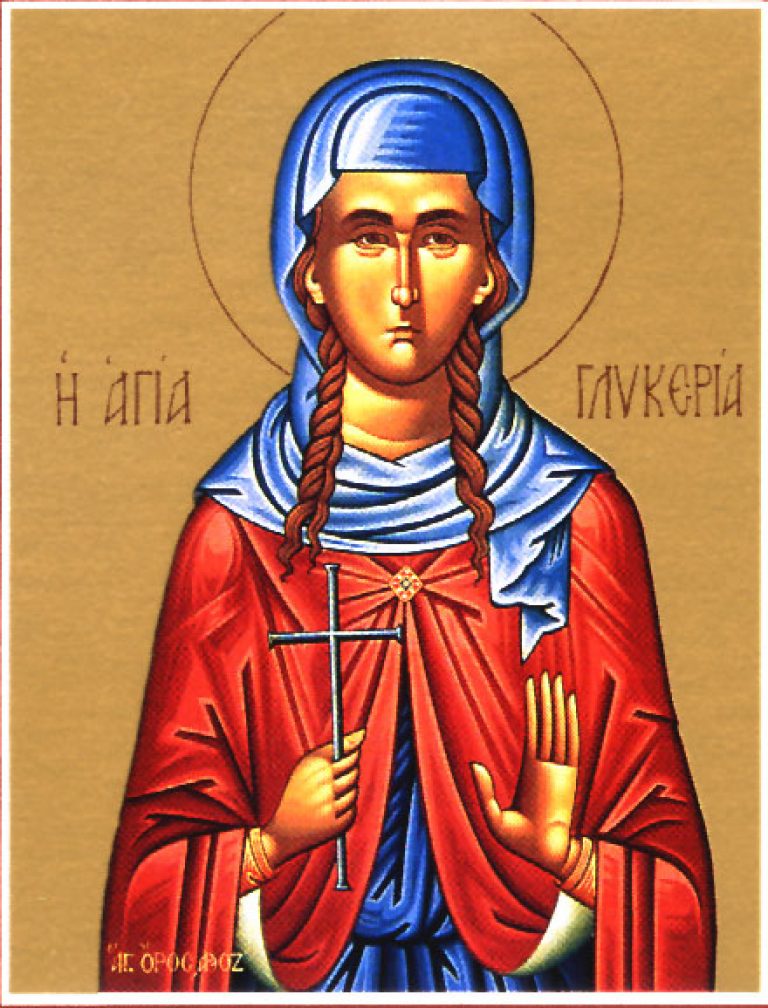
Saint Glyceria suffered as a martyr for her faith in Christ in the second century, during a persecution against Christians under the emperor Antoninus (138-161). She came from an illustrious family, and her father Macarius was a high-ranking Roman official. Later, the family moved to the Thracian city of Trajanopolis. Saint Glyceria lost both her father and mother at an early age. Falling in with Christians, she converted to the true Faith, and she visited the church every day. Sabinus, the prefect of Trajanopolis, received the imperial edict ordering Christians to offer sacrifice to the idols, and so he designated a certain day for the inhabitants of the city to worship the idol Zeus. Saint Glyceria firmly resolved to suffer for Christ. She told the Christians of her intention, and she begged them to pray that the Lord would give her the strength to undergo the sufferings. On the appoin...
Martyr Laodicius the Keeper of the Prison
Saint Glyceria was tortured at Heraclea in Thrace during a persecution against Christians under the emperor Antoninus (138-161).The martyr was then thrown into prison onto sharp stones. She prayed incessantly, and at midnight an angel appeared in the prison and healed her of her wounds. When the jailer Laodicius came for the saint in the morning, he did not recognize her. Thinking that the martyr had been taken away, he feared he would be punished for letting her escape. He wanted to kill himself, but Saint Glyceria stopped him. Shaken by the miracle, Laodicius believed in the true God, and he entreated the saint to pray that he might suffer and die for Christ with her. “Follow Christ and you will be saved,” the holy martyr replied. Laodicius placed upon himself the chains with which the saint was bound, and at the trial he told the prefect and everyone present about the miraculous heali...
Righteous Virgin Glykerίa of Novgorod
The scarcity of information about Saint Glykeria (Γλυκερία) indicates that she kept the details of her life and ascetical struggles hidden from those around her. She was the daughter of Panteleimon, an official of Legoscha Street in Great Novgorod. On July 14, 1572, her body was found incorrupt, fifty years after her repose. An old woman named Nastasia told Archbishop Leonid of Novgorod that she had received healing fifty years before, when Saint Glykeria was buried. The second Novgorod Chronicle states that her tomb was discovered behind the stone church of the Holy Martyrs Florus and Laurus, and that her relics were incorrupt. Afterward, Archbishop Leonid solemnly placed the Saint's relics in the church of Saints Florus and Laurus. On the same day, at the Righteous one's tomb, the four-year-old son of Bogdan Suvorov was healed of an illness, after which other miraculous healings occurr...
Venerable Macarius, Archimandrite of Ovruch

The Relics of the Hieromartyr Macarius, Archimandrite of Kanev, were transferred on May 13, 1688 from Kanev to the city of Pereslavl because of the threat of enemy invasion. The main Feast commemorating Saint Macarius is on September 7.
Martyr Alexander of Rome
The Holy Martyr Alexander suffered for Christ at the beginning of the fourth century. He was a soldier serving in the regiment of the tribune Tiberian at Rome. When he was eighteen, the Roman emperor Maximian Hercules (284-305) issued an edict that all citizens were to go to the temple of Jupiter outside the city on a designated day to offer sacrifice. The tribune Tiberian assembled his soldiers and he ordered them to go to this festival, but Alexander, raised from childhood in the Christian Faith, refused and said that he would not offer sacrifice to devils. Tiberian reported to the emperor Maximian that there was a soldier in his regiment who was a Christian. Soldiers were immediately sent to arrest Alexander. Alexander was asleep, but an angel woke him and warned him of his impending martyrdom, saying that he would be with him during this time. When the soldiers arrived, Alexander cam...
Saint Pausicacus, Bishop of Synnada
Saint Pausicacus, Bishop of Synnada, lived at the end of the sixth century in the Syrian city of Apamea. He had been raised in the Christian Faith by his pious parents, and he began to lead an ascetic life of prayer, vigil and fasting in his youth. The Lord gave him the gift of healing sicknesses of both soul and body. Patriarch Cyriacus of Constantinople (591-606) consecrated Saint Pausicacus as Bishop of Synnada. Saint Pausicacus wanted neither heretics nor dissolute people in his flock. He constantly taught his flock about the virtuous life, and his discourse was always powerful and lively. Having come to Constantinople on affairs of the Church, he healed the emperor Mauricius of sickness, and on his return journey he asked the Lord for water to quench the thirst of his companions. After the prayer of the saint, a spring of pure water sprang up from the ground. Saint Pausicacus died p...
Saint George the Confessor, with his wife and children, of Constantinople
The Holy Confessor George suffered for the veneration of holy icons at Constantinople in the first half of the ninth century. The emperor Theophilus demanded that Saint George renounce the veneration of holy icons, but the brave confessor refused the order and told the impious emperor that in venerating holy icons, we offer worship to their eternal Prototype [i.e. Christ the Logos]. For his disobedience, the emperor ordered Saint George’s property to be taken away and seized, and to drag him through the streets of Constantinople with a rope about his neck, and then cast him into prison. After this, Saint George was sent into exile with his wife Irene and their children. Saint George died after suffering many afflictions in exile.
Saint Irene, with her husband and children, of Constantinople
Saint Irene lived in Constantinople in the first half of the ninth century. When her husband Saint George was sent into exile because he venerated the holy icons, she and their children went with him.
Saint Euthymius the New, Founder of the Ivḗron Monastery, and his fellow Georgian Saints of Mount Athos
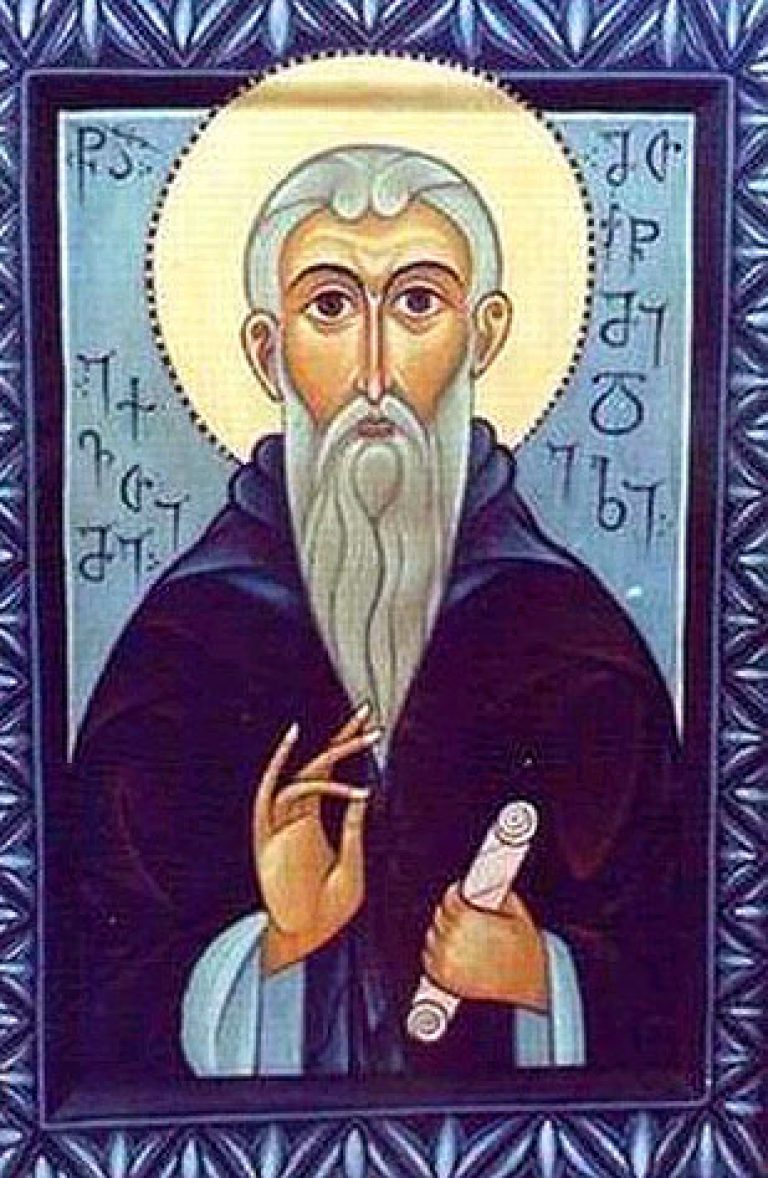
Our holy Father Euthymius was from the town of Tao in Georgia . He was the son of pious, noble and wealthy parents. When his father renounced the temporal and perishable splendor and glory of this world, preferring poverty in Christ which leads to heavenly riches, he donned the angelic schema of a monk, changed his name to John, and moved to Constantinople. Euthymius, who was still quite small, stayed with his grandfather (though some sources say that Euthymius was left with John’s brother-in-law) a man renowned in glory and in virtue, who raised the child in the instruction and admonition of the Lord. After a little time had passed, he took Euthymius with him, and they went to Constantinople looking for John. When he found him, he urged him with many words and tears to come back to his country. Not only was John not persuaded by this, he tried in every way to keep his son with him, ther...
Monastic Martyr John of the Ivḗron Monastery on Mount Athos
No information available at this time.
Monastic Martyr George of the Ivḗron Monastery on Mount Athos
No information available at this time.
Monastic Martyr Gabriel of the Ivḗron Monastery on Mount Athos
No information available at this time.
Martyrs killed by the Latins at the Ivḗron Monastery on Mount Athos
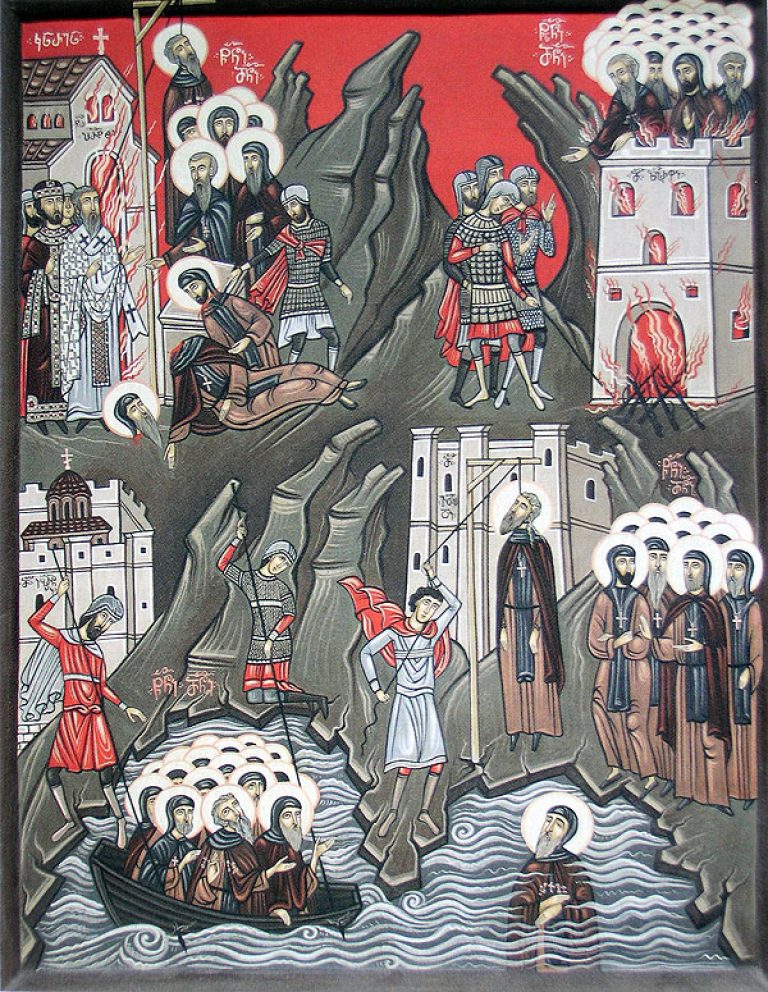
Georgian monks began to settle on Mt. Athos in the middle of the 10th century, and a Georgian monastery, Ivḗron, was founded there not long after. At that time foreign armies were constantly invading Mt. Athos. In the 13th century the Crusaders stormed through the region, and between 1259 and 1306 the pope’s private army devastated Mt. Athos several times. Monks of Zographou and Vatopedi monasteries and the Protaton were martyred for the Orthodox Faith, and the monks of the Ivḗron Monastery eventually met the same fate. During this period Georgian and Greek ascetics labored together at the Ivḗron Monastery, and many young ascetics of the new generation began to arrive from Georgia.
Feasts & Saints
GOARCH Digital Chant Stand services: 2026-05-13
Calendar index day: 13-Wednesday
The Holy Martyr Glyceria
Official Saints category of the Greek Orthodox Patriarchate of Antioch and All the East.